
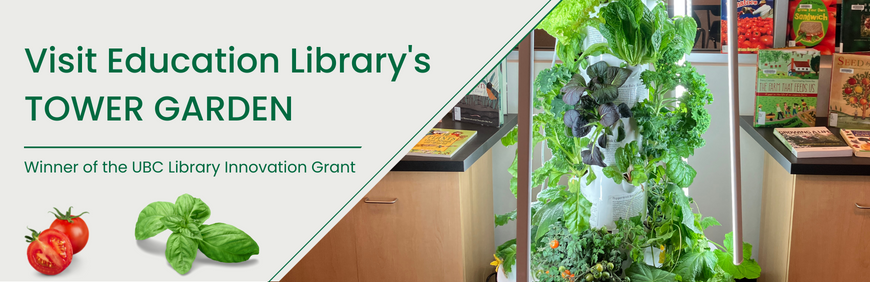
Visit the Tower Garden: Winner of the UBC Library Innovation Grant
The Education Library is excited to announce that its Tower Garden will be showcased throughout April and May! Back in December 2018, the Education Library received a generous donation of a Tower Garden from the UBC Faculty of Education’s Teacher Education Office. Following this, in 2019, a group of dedicated staff members at our branch […] Read More
New Books at Education Library: April 2024
Discover the latest arrivals at our library! We’ve recently acquired an exciting assortment of new books, spanning from captivating fiction to insightful non-fiction. Click on the title for more information: D804.66.S55 H66 2023 Harboring hope: the true story of how Henny Sinding helped Denmark’s Jews escape the Nazis / Susan Hood. G875.C7 T44 2023 The indestructible Tom […] Read More
Book a consultation with a librarian: Appointments now available on LibCal
Need a one-on-one appointment to help you with your research? Book a consultation with a librarian or student librarian on LibCal: https://libcal.library.ubc.ca/appointments/edlib Read More
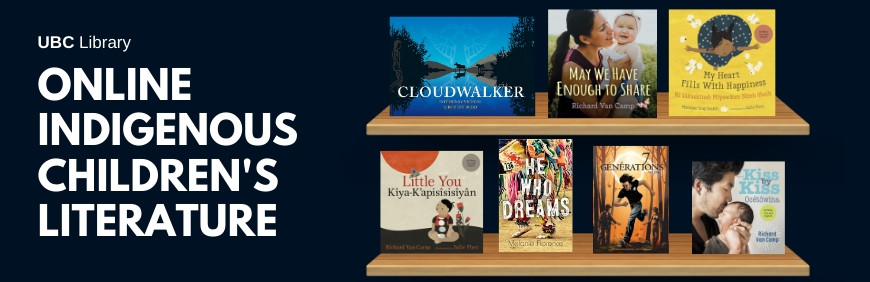
Online Indigenous Children’s Literature
X̱wi7x̱wa Library and Education Library are pleased to present a virtual display of over 50 electronic picture books, graphic novels, fiction, non-fiction and biographies featuring Indigenous themes and authorship. These Indigenous children’s literature titles were carefully compiled by the employees of X̱wi7x̱wa Library and are all available online at UBC Library. Please click on the […] Read More
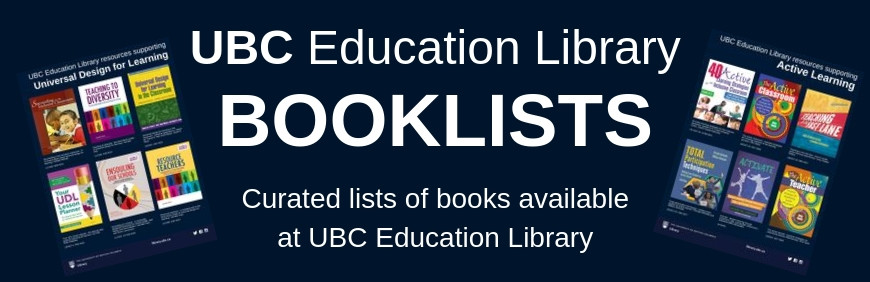
UBC Education Library Booklists
UBC Education Library is pleased to announce a new series of themed booklists on topics related to teaching, learning, and children’s literature. The UBC Education Library Booklists offer an entry point to the collection by highlighting suggested books on a variety of topics. Each list features titles about current and historical topics in education, pedagogy, […] Read More
Help from a Librarian is always just a click away. Ask Us!
Off-campus and need help from a librarian? Use the Ask Us! button located on the navigation bar of most UBC Library webpages to phone, chat or email with a librarian. Handy for distance users! Read More
How Do I?
Research
Faculty Services
Education Library Blog
- Visit the Tower Garden: Winner of the UBC Library Innovation Grant
The Education Library is excited to announce that its Tower Garden wil... - Collection Spotlight: Earth Day, April 22, 2024
April 22, 2024 is Earth Day! Earth Day is an annual event held to r... - New Books at Education Library: April 2024
Discover the latest arrivals at our library! We've recently acquired...